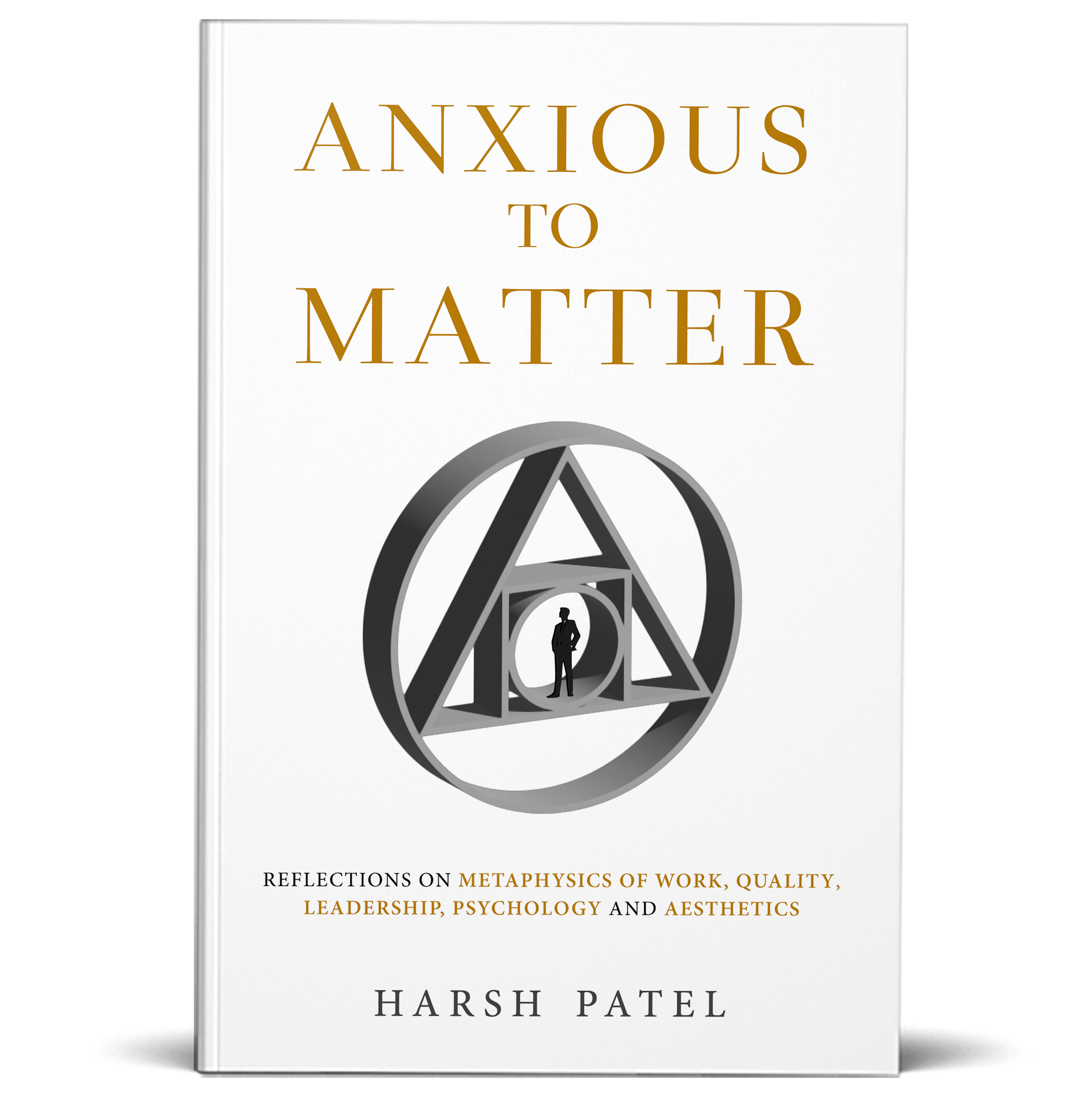
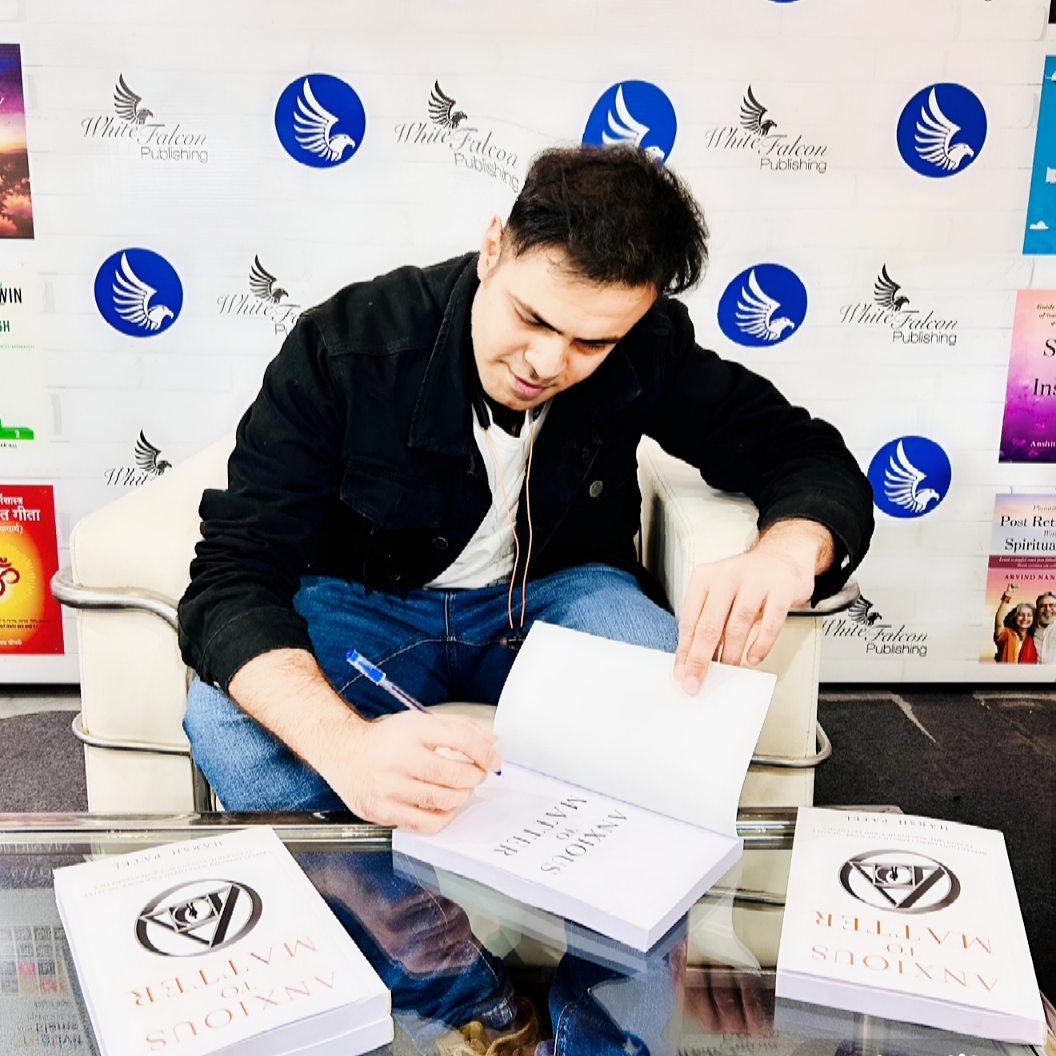
In a world increasingly defined by abstraction, automation, and expediency, Anxious to Matter explores one of the most fundamental human concerns — the desire to matter. Through a collection of essays, this book examines the intersection of work, meaning, and quality, engaging with ideas from metaphysics, epistemology, aesthetics, leadership, and design.
Blending philosophical inquiry with pragmatic reflections, the book draws from thinkers such as Plato, Kant, Schopenhauer, Nietzsche, Jung, Wittgenstein, as well as modern intellectuals like Roger Penrose, Daniel Kahneman, and Judea Pearl. It challenges the commodification of life and labor, revealing how modern structures dilute quality, fragment meaning, and create a growing sense of existential anxiety.
This book is for:
Ever since before my teenage years, I found myself unsettled by the shallowness of discourse around me - conversations that masqueraded as profound yet lacked any real substance. People spoke with conviction, as if they were shaping the world, but their mannerisms, their borrowed ideas, and their performative intelligence betrayed a deeper dishonesty — not just in speech, but in their entire approach to life. Grand ideas were invoked, but rarely examined. Greatness was admired, yet few questioned what it truly meant. Their very conception of what was ‘great’ felt juvenile, pithy, vulgar, undignified and devoid of rigour. I found myself troubled by how a layperson could be so enthralled by a politician’s or a celebrity’s mindless antics and at the same time engage in discussions around ‘What truly matters in life’ or ‘Why should a person choose a specific career’. I could not articulate it at the time, but I sensed an underlying hollowness — a disconnect between the rhetoric of meaning and the reality of engagement.
This feeling followed me into my academic and professional life, where I encountered the same patterns—where knowledge was often measured in surface-level familiarity rather than deep inquiry, and where ambition frequently outpaced reflection. I did not set out to write a book. It was not a planned process, but this existential dissonance compelled me to write. I found myself drawn into an ongoing reckoning with meaning—reading, reflecting, questioning, and writing, not out of choice, but necessity. The more I explored, the more I recognized a larger existential challenge: the desire to matter in a world that increasingly feels fragmented, where meaning is elusive, and where work is often reduced to a mere function rather than an expression of purpose.
This book is an outcome of that pursuit — not to prescribe answers, but to engage in the deeper inquiry that such questions demand, without attempting to reduce them into digestible platitudes. it is an effort to understand — ruthlessly, philosophically, and without concession — what it truly means to matter. I do not claim to have resolved these tensions, only that I have wrestled with them — and in doing so, I invite the reader to do the same.